
Choosing a wedding videographer is one of the most important decisions you'll make in your entire planning process — and one of the most underestimated.
Your photos will hang on walls. Your video is what lets you relive the day. It's the only way you'll ever hear your vows again, see your father's face when you walked down the aisle, or feel the energy of the room during your first dance. It's the piece of your wedding that will matter more and more with every year that passes.
So before you sign a contract, ask these questions. And pay close attention to the answers.
1. Can I see full wedding films — not just highlight reels?
This is the single most important question you can ask, and most couples forget it.
A highlight reel is a few minutes set to music, carefully edited to look cinematic and emotional. Almost anyone can make a beautiful highlight reel. What you need to know is whether your videographer can tell the story of an entire day.
Ask to see a full ceremony film. Ask to see a full reception edit with speeches. Ask to see a complete wedding film from start to finish. If a videographer can only show you highlight reels, that's a red flag.
At Paige Wright Media, every package includes a fully edited ceremony film, speeches and toasts, and a highlight film — and I'm always happy to share complete films with couples who want to see the full picture.
2. Will you be the one filming our wedding?
This is a question couples often don't think to ask — and then are surprised on the day.
Some videography companies book multiple weddings and send associate videographers or second shooters you've never met. There's nothing inherently wrong with this, but you deserve to know. The person you meet during a consultation — whose work you fell in love with, whose personality clicked with yours — should ideally be the person holding the camera on your wedding day.
At Paige Wright Media, I film every wedding personally. You'll never show up on your wedding day and meet a stranger.
3. Who will be editing our film?
It is a bit of a secret in the industry that many videographers outsource editing of their wedding films to international companies. Like the above point, there’s nothing inherently wrong with this. But you do deserve to know. For myself and some other videographers it is a real point of pride that we carry our clients from that first email to the final film delivery. I do not want to do 50 weddings a year, I’d rather do 20 and really get to know each couple- what is important to them about their wedding day, who in their family they are the closest to and really want captured on video, what silly moments with their friends are the most meaningful to them.
4. What is your filming style?
Wedding videography has a wide spectrum of styles, and it matters enormously that yours matches what you actually want.
Some videographers are highly cinematic and directed — they'll pose you, set up shots, and produce something that feels more like a music video than a documentary. Others, like me, work in a fly-on-the-wall documentary style — staying present but unobtrusive, capturing real moments as they happen rather than orchestrating them.
Neither style is wrong, but they produce very different films. Watch the work carefully. Does it feel authentic and emotional, or polished and produced? Does it feel like that couple's wedding, or could it be anyone's? Make sure the style you're seeing is the style you actually want.
5. How many cameras will you use?
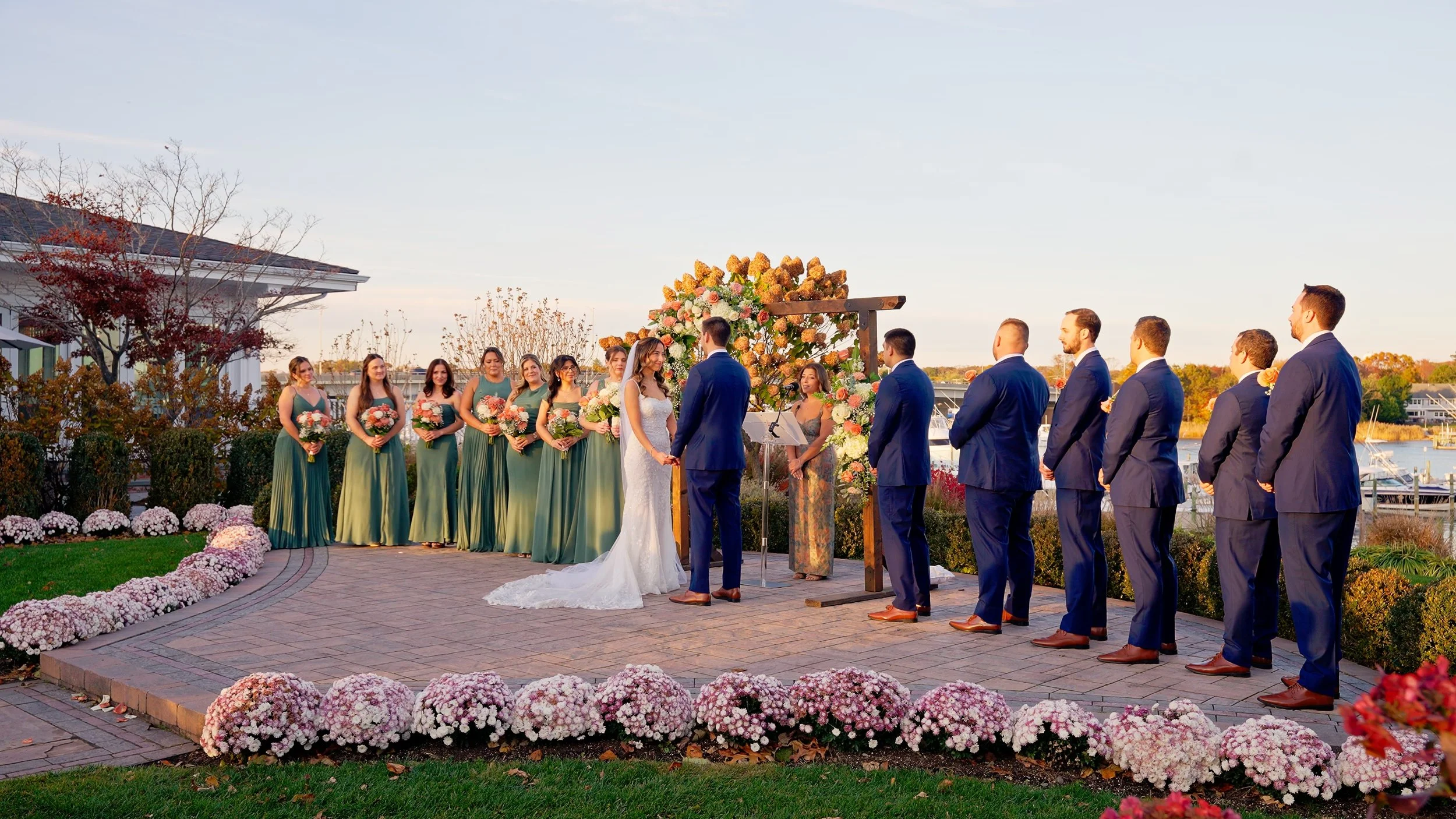
A single-camera wedding film has significant limitations — particularly during the ceremony. If the videographer is shooting from the back of the aisle, you're not going to get close-up reactions, multiple angles, or the kind of editorial variety that makes a ceremony film feel dynamic and emotional.
Two cameras at minimum is the standard for professional wedding videography. A second camera — whether operated by a second shooter or on a stable tripod — allows for coverage that feels complete rather than pieced together.
Ask specifically how the ceremony will be covered, where cameras will be positioned, and whether a second shooter is included or available as an add-on.
6. Do you shoot with audio in mind?
Great wedding video is 50% audio. A beautiful image of your vows means nothing if the audio is muffled, distorted, or drowned out by wind.
Ask your potential videographer how they capture audio during the ceremony — do they use a lapel mic on the officiant or groom? A recorder near the speakers? Multiple audio sources as backup? What happens if there's no sound system at the venue?
The best videographers treat audio as seriously as they treat the visual — because without clean audio, you can't hear the words that matter most.
7. How long until we receive our films?
Wedding film editing is time-consuming and detail-intensive, and turnaround times vary wildly across the industry — anywhere from 6 weeks to 9 months or more.
Ask for a specific timeline, and make sure it's written into your contract. Ask also whether you'll receive a sneak peek or preview clip first. If a videographer can't give you a clear answer on turnaround time, that's worth noting.
At Paige Wright Media, turnaround times and delivery expectations are always clearly outlined in your contract so there are no surprises.
8.Is drone footage available — and are you FAA certified?
Drone footage has become one of the most sought-after elements in modern wedding films, and for good reason — aerial footage of a venue, its grounds, and the surrounding landscape adds a dimension that ground-level cameras simply can't capture.
But this is an area where you need to ask the right follow-up questions. FAA certification is legally required to fly a drone commercially in the United States. Always ask whether your videographer is FAA certified, and confirm with your venue that drone filming is permitted on the property.
At Paige Wright Media, I am fully FAA certified and always confirm drone permissions with venues in advance.
One Final Thought
The best wedding videographers are not just technically skilled — they're calm, unobtrusive, emotionally attuned, and genuinely invested in your day. You should feel comfortable with them in the room. You should trust that when the moment happens — the real, unrepeatable, fleeting moment — they'll be in the right place to capture it.
If something feels off in your consultation, pay attention to that feeling. The right videographer will make you feel excited, not anxious.